About Work CV Contact
Principal Product Designer

Michael
Renninger

I build elegant, usable solutions for highly technical challenges.

Scroll to explore
About
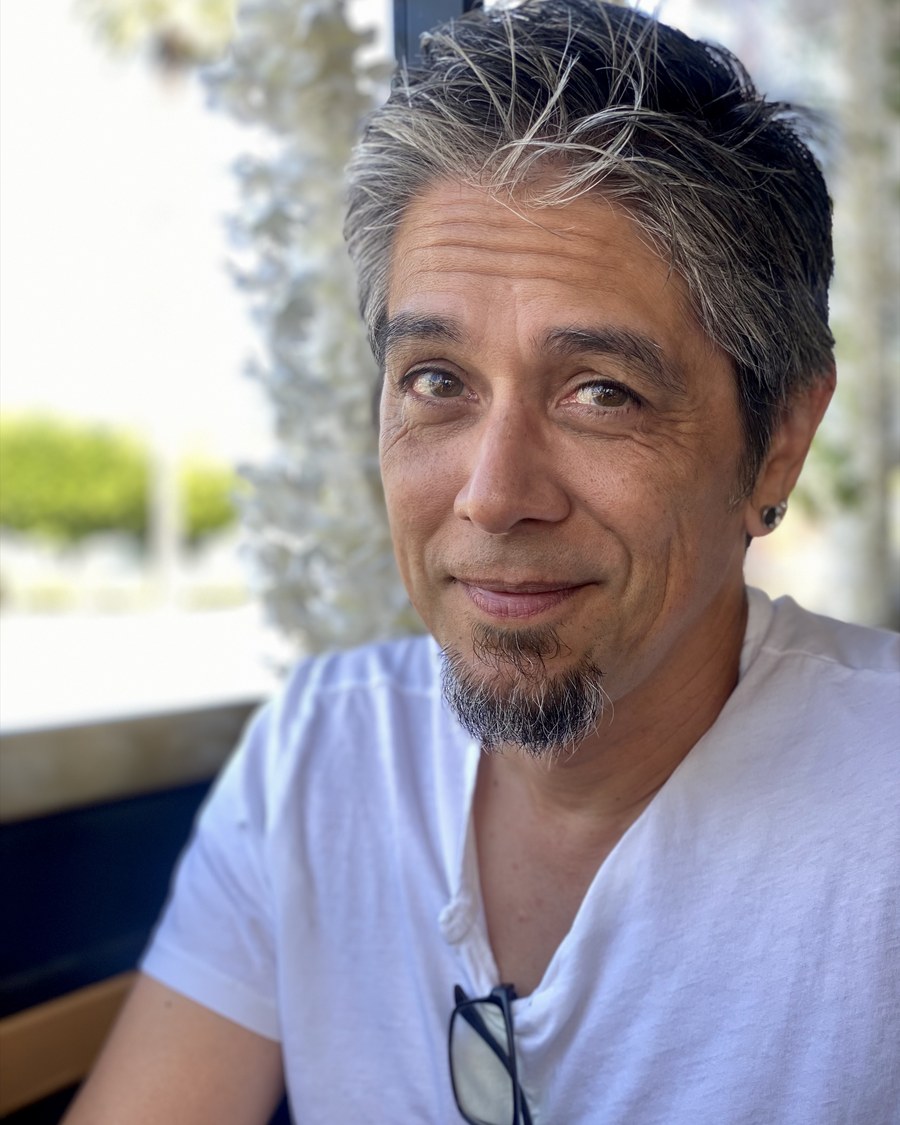
Michael Renninger
Los Angeles, California

Growing up in Northern California and later moving south for UCLA, my design journey began unexpectedly. I initially created album art and flyers for my bands, then moved on to building band websites in HTML, and took a turn with Flash. In the experimental early days of ActionScript, I embraced the endless possibilities. Music was my first passion, but I realized the lifestyle wasn't for me. To me, music is to emotion what math is to logic: two distinct languages that describe the world differently. Design bridges these realms, merging feeling with structure.

My Psychology degree from UCLA shaped my design approach, sparking my interest in how people think, what they assume, and why. The empathy required for good UX is a direct extension of that curiosity about the human condition. Outside of design, I enjoy spending time outdoors with my family, hiking around L.A. or Joshua Tree, watching my daughter train on her horse, or being as close to the ocean as possible. I've spent time underwater in places like Madagascar, volunteering with a conservation NGO to study reef health and advocate for sustainable fishing. Recently, I've been observing the hummingbird nests in our backyard. Five active nests this year, three chicks fledged so far. Reminds me that some of the most impossibly magical things are also the smallest.

Spring 2026
Selected Work

Eight years.
Four programs.
One through-line.

The following case studies represent the most recent chapter of a 25+ year career in design: eight years at Ring, where I led design on the company's most complex and emerging initiatives. Every project here spans years, not sprints. Each one required holding a vision across organizational change, hardware pivots, and shifting strategy, while delivering something real at every stage along the way.

01
Event Timeline Evolution
2018 – 2024 UX Design Prototyping Strategy

The Story

Chapter 1 2018
Discrete Events

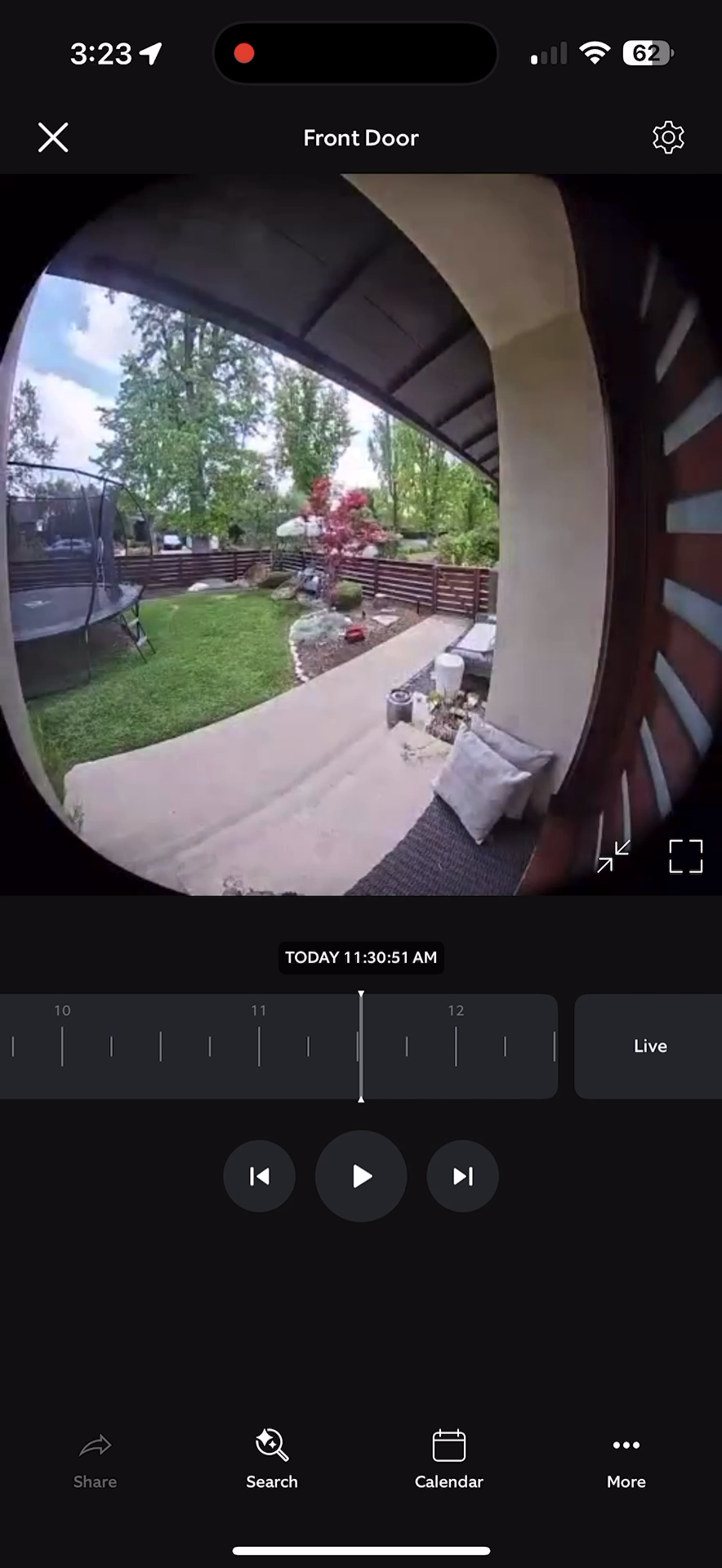
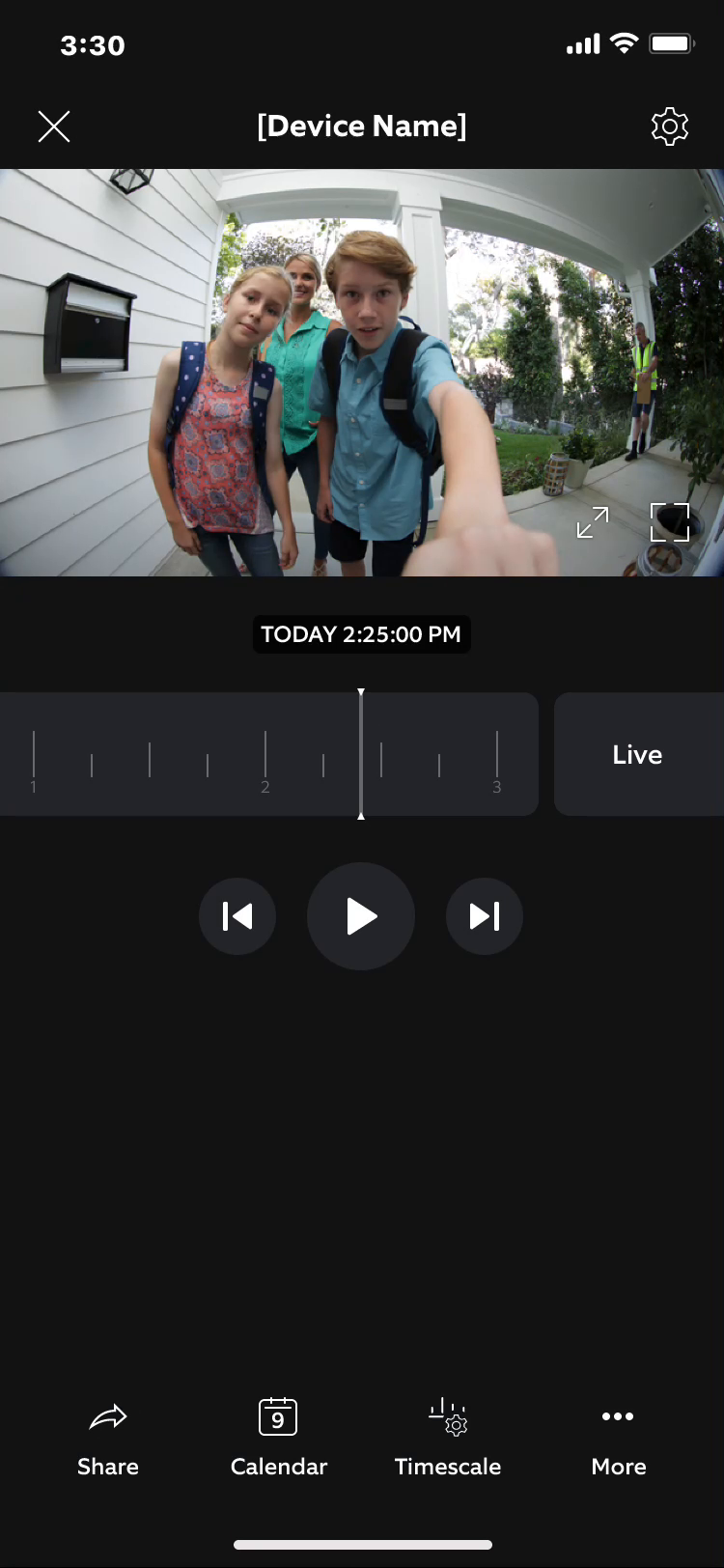
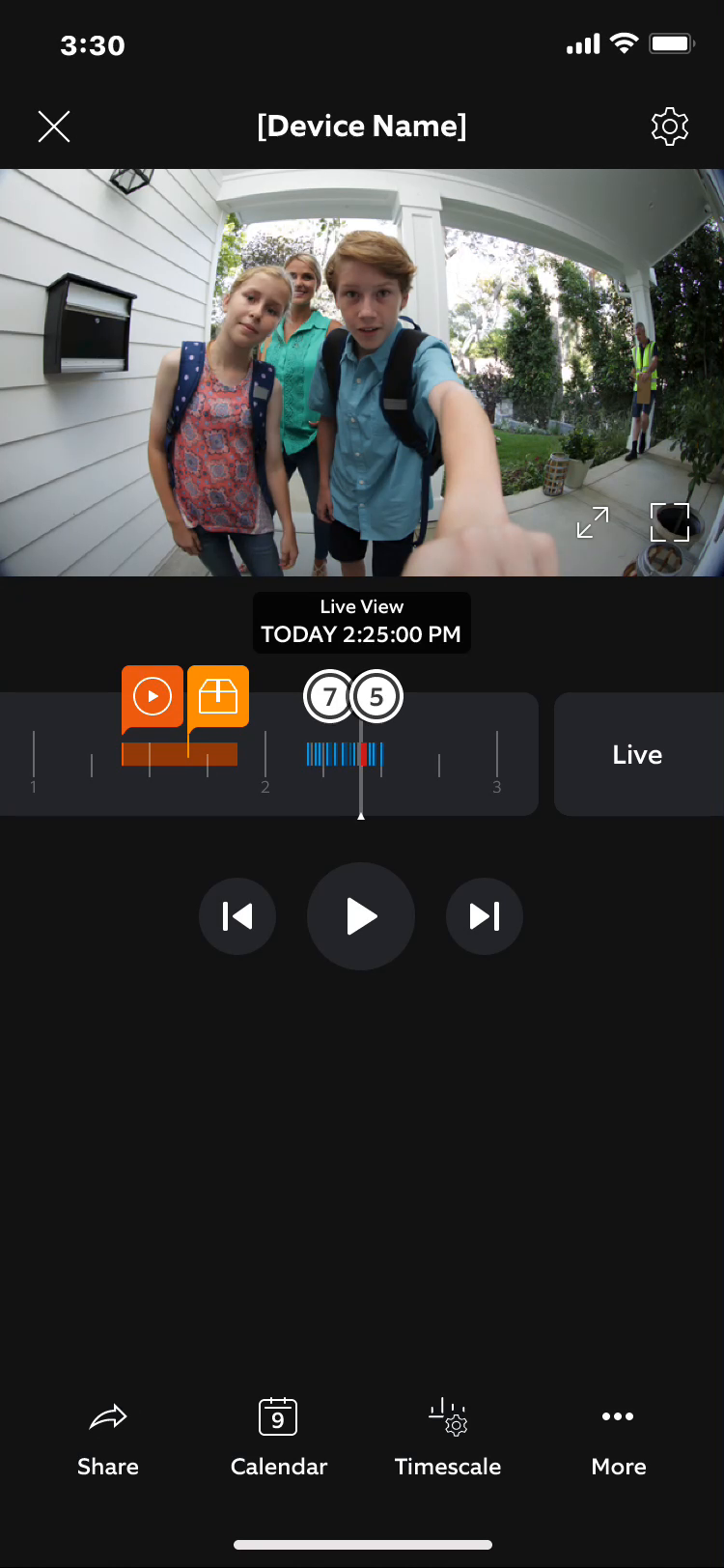
When I joined Ring, the timeline was a simple horizontal scrubber showing motion-triggered events with nothing in between. Gaps in the record meant gaps in the story, and potential gaps in security.

Event Timeline
Chapter 2 2019–2021 · 24x7 Lite
Filling the Gaps

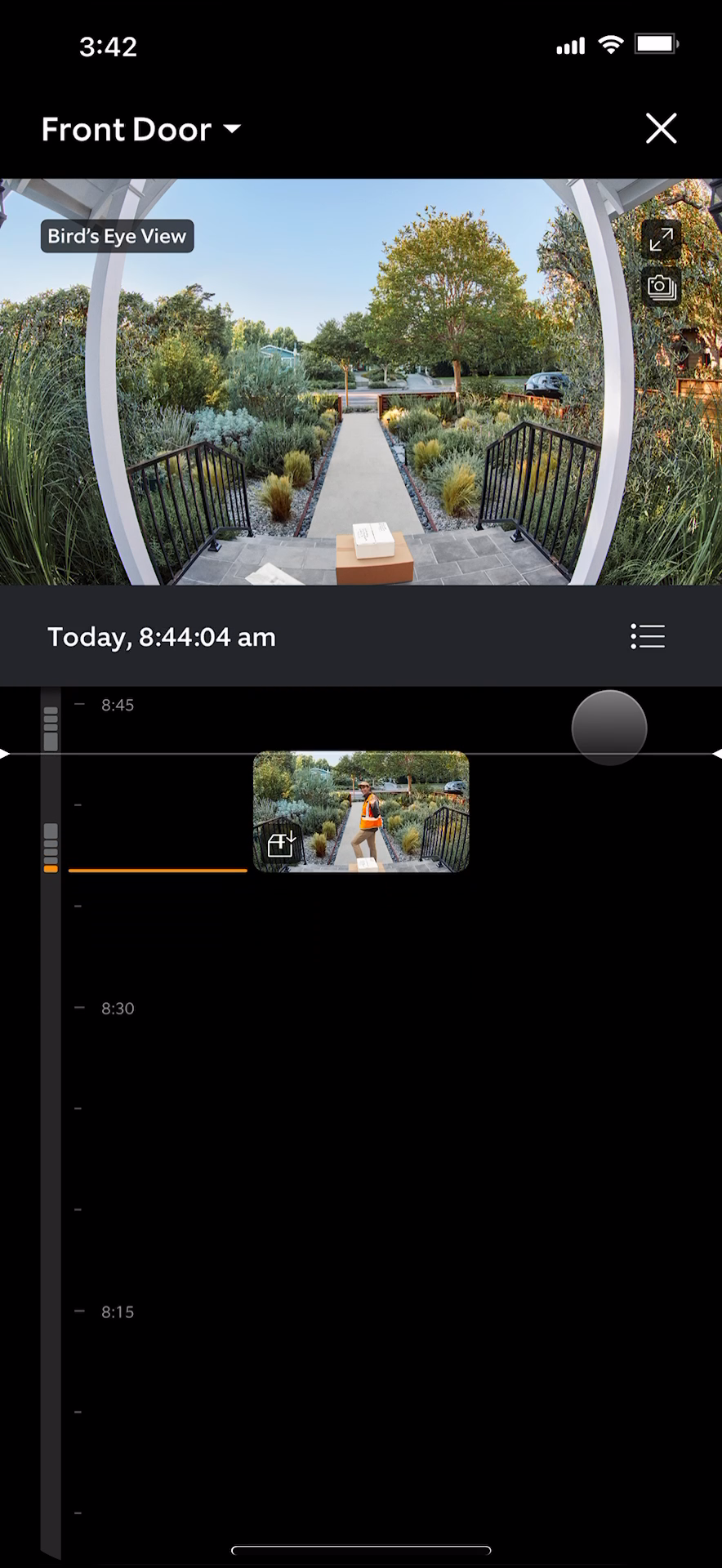
I designed the next generation: incremental snapshots between motion events at a 2px/minute cadence, with density intelligently adaptive to device hardware (battery vs. wired), onboard compute capability. The timeline became a more continuous record. As a byproduct, the periodic snapshot behavior changed Ring cameras' device classification, avoiding approximately $40 million in export tariff costs from 2019 to 2021.

Designed in Figma · Prototyped in Figma and Adobe AIR for Mobile
Snapshot Timeline Example
Chapter 3 2022–2024 · 24x7 HD
Continuous Recording

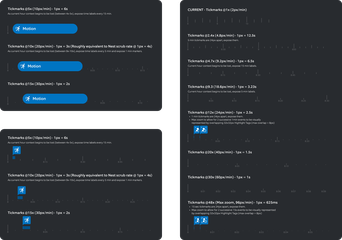
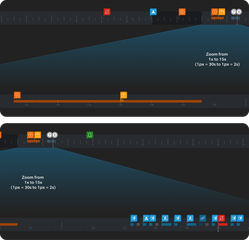
Continuous recording was Ring's most-requested feature for years. Fulfilling it required completely rearchitecting how time itself was represented. Events became markers rather than containers. I designed a scalable timeline architecture ranging from 30 seconds per pixel to 1 second per pixel, navigable via a slider or pinch gesture, demonstrated to Directors and VPs throughout.

Designed + prototyped in Figma
24/7 Timeline Architecture 24/7 Timeline Structure
24/7 Timeline No Markers
24/7 Timeline With Markers
Chapter 4 2024 · Project Lily
The Vertical Pivot

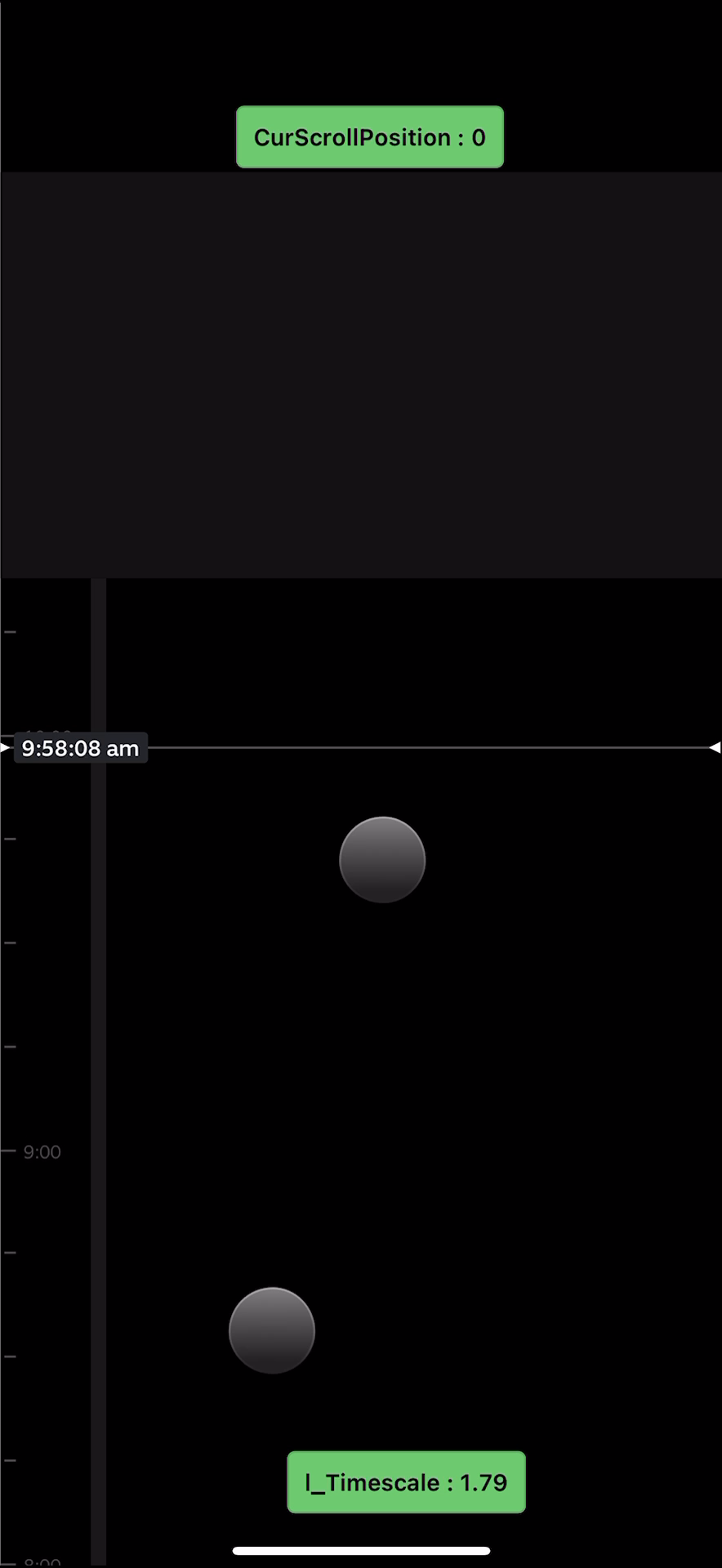
An offhand VP comment ("what else do you have?") became the catalyst for the most conceptually ambitious chapter. The pinch/spread gesture I'd always wanted for time-scaling was ergonomically awkward on a horizontal timeline. Rotating to vertical unlocked natural thumb movement, freed up space for richer event information, and enabled the most unexpected insight: Live View is simply the leading edge of the timeline. Past and present, one continuous experience.

Designed in Figma · Prototyped in ProtoPie
VTL Scaling Prototype
VTL Prototype

Impact

$40M
Export tariff costs avoided through device reclassification enabled by snapshot feature (2019–2021)
4.15
Average CSAT score at 24x7 HD launch, one of Ring's most successful feature launches
40–45%
Of customers actively used the time-scaling feature post-launch
6 yrs
Continuous design leadership across four distinct generations of Ring's most-used feature

"Six years on a single foundational feature. Each generation more conceptually ambitious than the last. Not iteration. A thesis."

02
Advanced Encryption
2021 – 2026 UX Design Security UX Cross-functional

The Story

The Problem Late 2019
A Trust Crisis

Bad actors were intercepting and injecting into Ring video feeds. Ring already offered encryption in transit and at rest, but this didn't address malicious injection. The reputational damage was real and required a strategic response.

First Generation 2021 · Cerulean
Effective, But Inaccessible

I joined the encryption program at its inception in late 2021. Cerulean, Ring's first E2E encryption method, was effective, earning recognition from NYT Wirecutter, Consumer Reports, and the EFF. But the cryptographic architecture demanded a 12–16 screen enrollment process, disabled many core features on signup, and was limited to certain cameras. Adoption was predictably low. A secure product nobody uses isn't secure.

Second Generation 2021–2026 · MLS
Ground-Up Rethink

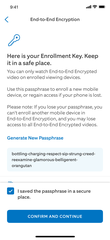
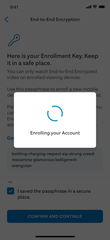
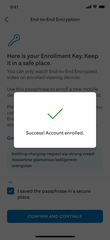
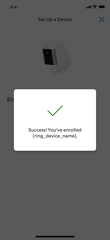
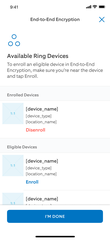
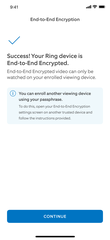
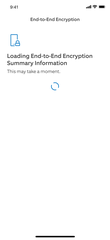
When I was brought on to help spin up the strategy for Advanced Encryption, I had one guiding principle from the start: the best encryption is the kind the user never thinks about. Built on MLS (Messaging Layer Security), Ring's latest encryption initiative introduces two tiers: Advanced Encryption with temporary cloud key exchange (so AI features like Smart Search still work), and fully subpoena-proof E2EE where decryption only happens between enrolled devices. Enrollment redesigned from 18 screens to 3. Supported on practically all Ring cameras at launch.

The Pivot Gauntlet 2026
Designing Under Pressure

Four major strategy pivots in the final stretch: restructuring to launch E2EE first, then designing a pause/restart mechanism for Advanced Encryption to avoid blocking new AI features, then accommodating shared user support, then resolving cross-program dependencies between encryption and Ring's new AI assistant. Each required rapid but deeply considered design responses: not moving screens around, but re-examining the entire user mental model under new technical constraints.

Designed in Figma

Impact

83%
Reduction in enrollment screens (Cerulean: 18 → Advanced Encryption: 3)
77%
Reduction in taps to complete enrollment (13 → 3)
~All
Ring cameras supported at Advanced Encryption launch vs. select models for Cerulean
Jul '26
Target launch: five years of work shipping to tens of millions of customers

The Shape of an Enrollment

Cerulean
2021 · 18 enrollment screens · 13 taps
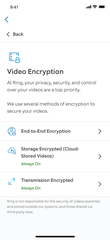
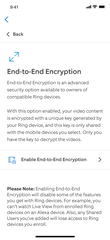
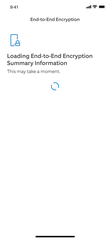
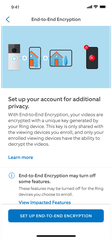
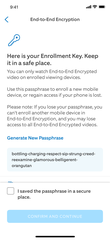
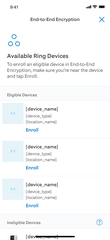
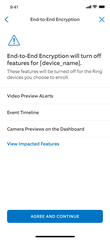
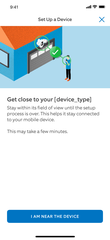
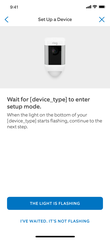
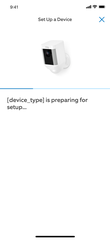
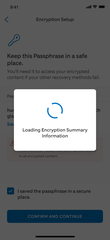
Video Encryption E2EE Loading E2EE Summary E2EE Setup Summary Passphrase generated Passphrase generated Passphrase generated Passphrase generated Producer Enrollment — Available Devices E2EE Impacted Features Direct Connect Step 1 Direct Connect Step 2 Direct Connect Step 3 Direct Connect Step 4 Direct Connect Step 4 Confirm Direct Connect Step 5 Direct Connect Step 6 Direct Connect Step 6 Success Producer Enrollment Available Devices Producer Enrollment Success Loading E2EE Summary Encryption Management
Advanced Encryption
2026 · 3 enrollment screens · 3 taps
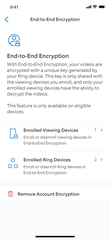
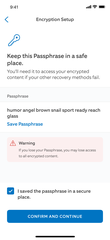
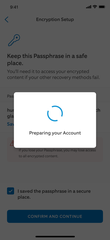
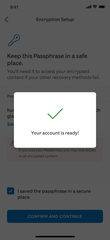
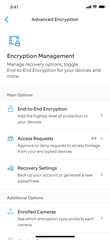
Enroll Account Start Passphrase Created Enrolling Status Modal Enroll Success Loading Summary AE Main
18 → 3
Enrollment screens reduced from 18 to 3.
77% fewer taps. Stronger encryption. Better security model.

"The best design outcome here is that the user never thinks about encryption at all."

03
Ask Ring: AI Assistant
2025 – 2026 AI/LLM UX Design Systems Multi-agent

The Story

The Brief
Taming Notification Fatigue

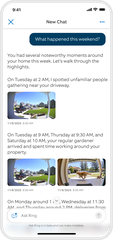
Ring had been steadily building out its AI feature portfolio: Smart Descriptions, Unusual Event Detection, Fire Watch, Search Party, Familiar Faces. Each was powerful on its own. But as the portfolio grew, so did the complexity of surfacing the right insight to the right user at the right moment. Ask Ring was the natural next step: a single conversational interface that could unify AI-generated insights, customer support, and a shopping assistant into one coherent experience.

The Architecture
Three Agents, One Experience

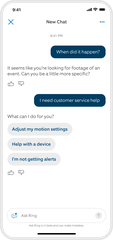
Ask Ring orchestrates three specialized agents with invisible handoffs: a Customer Service agent for setup and troubleshooting, a Sales agent for product recommendations, and the security insights agent, which synthesizes the last seven days of footage across all enrolled cameras to answer questions about what happened, when, and where. Responses are returned as chunked narrative paired with grouped video clips: a story about your home, not a database result.

The Inheritance December 2025
Bringing Order to Chaos

I inherited the program when its previous lead stepped away. The design was non-compliant with Ring's design system: fractional measurements, arbitrary color usage, no componentization. My first act was establishing order: whole-value measurements, standardized padding and gutters, proper type and color application. Once the foundation was solid, I spent four months steering through constant product requirement evolution toward a June 2026 launch.

The Cross-Program Challenge
Cross-Program Fluency

The AI assistant needs temporary key access to encrypted footage to generate insights, which put it in direct conflict with Advanced Encryption's architecture. Because I held deep context in both programs simultaneously, I was able to navigate the intersection quickly: designing the pause/restart mechanism for Advanced Encryption that let both programs coexist without blocking each other. No one else at Ring had that dual context.

Designed in Figma

Impact

1 week
To bring inherited design into full compliance: type, color, fractional measurements, components
6 months
From inheritance to launch — Dec 2025 to Jun 2026
Tens of millions
Of Ring customers who will experience three AI programs, one encryption dependency, and a full design system overhaul — delivered as an elegantly simple chat interface.

Visuals

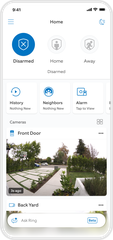
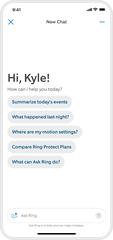
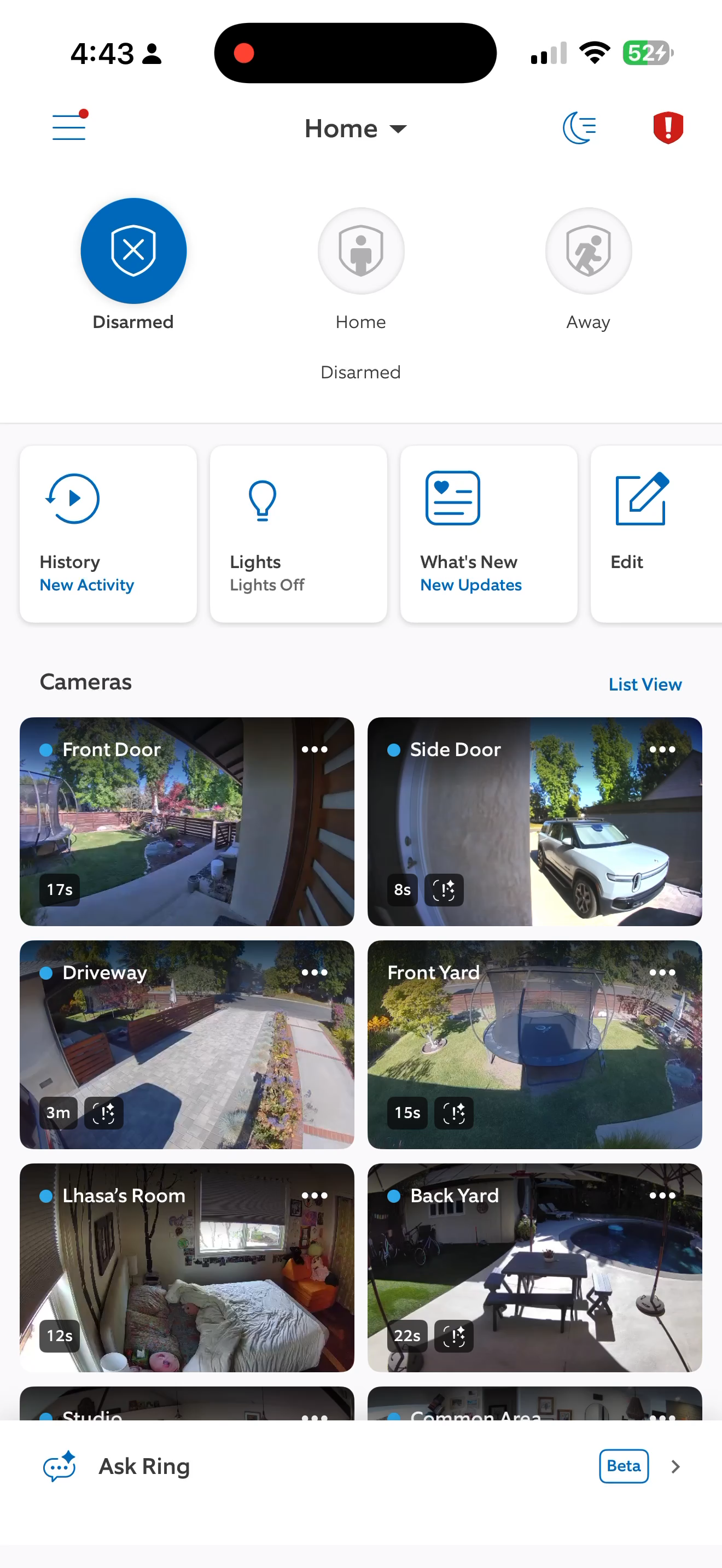
Main Dashboard Empty State Multiple Video Response Cold-Start Handoff
Ask Ring Chat

"The goal is for users to feel better informed and more supported, experiencing it as natural conversation, not a feature."

04
Always Home Cam
2021 – 2026 Emerging Tech Hardware UX Robotics

The Story

Always Home Cam v1 February 2021
First Principles

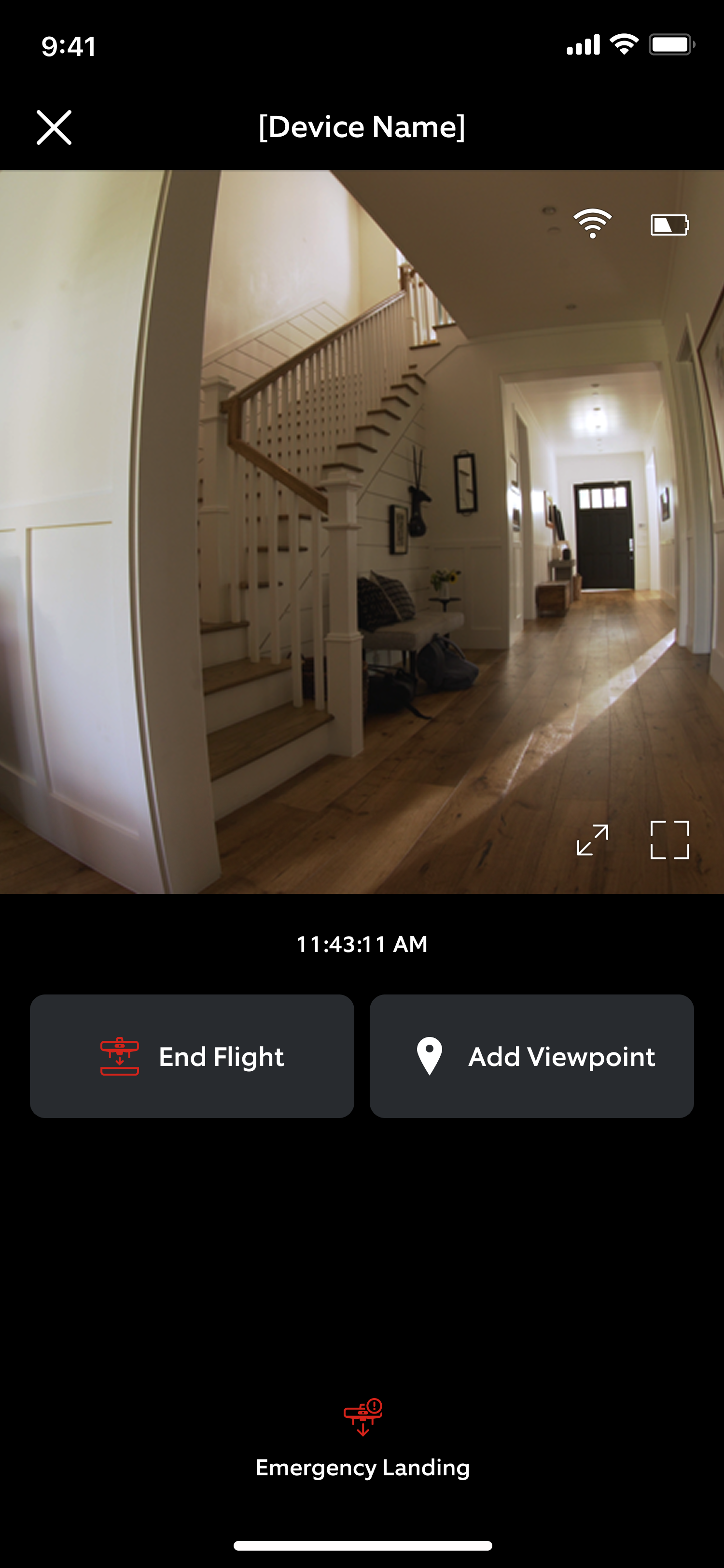
I led all design for Ring's first autonomous indoor security drone from the ground up: onboarding, flight path creation, viewpoint creation, editing, live view. The hardware was the enemy. Low center of gravity caused unexpected wobble, LiDAR sensors were hypersensitive, and setup required holding the drone in one hand while monitoring your phone in the other. ~1,000 units shipped to press and beta testers. Reviews were mixed. The learnings were foundational.

Designed + prototyped in Figma
Always Home Cam v2 2023
Hardware as UX Problem

The second iteration never shipped but was pivotal. I consulted on hardware design from a user perspective: thumb notch placement, grip geometry to avoid tripping LiDAR, and helped validate the UX implications of VIO (Visual-Inertial Odometry) as a technology direction. This was also where I began sketching an entirely different training paradigm: what if the drone followed the user, instead of the user carrying the drone?

Designed in Figma
Always Home Cam v3 2023–2024
The Follow-Me Breakthrough

VSLAM (Visual Simultaneous Localization and Mapping) replaced VIO, enabling genuine autonomy. The interaction model I'd been working toward became real: the drone hovers above its dock, locks onto you as its subject, follows you through a room while you use the Ring app to designate viewpoints by pausing, rotating, telling it to remember a position and angle. The user is freed from holding the drone entirely. Errors dropped dramatically. Successful path training increased significantly.

Designed + prototyped in Figma and ProtoPie
Always Home Cam, Current Generation 2024
Foundation for Robotics

My work across the first three generations laid the foundation for the current generation's UX and interaction patterns, and continues to inform Ring's broader approach to robotics UX. Three hardware generations, one continuous design question: who is this for, what problems does it solve, and what problems does it create?

Designed in Figma

Impact

4
Hardware generations led or consulted across: v1, v2, v3, and the current generation
Dramatically reduced setup errors through the follow-me training paradigm introduced in v3
UX foundations established for the current generation now informing Ring's broader robotics program

Visuals

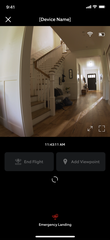
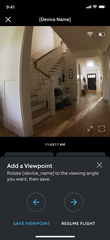
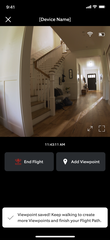
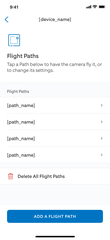
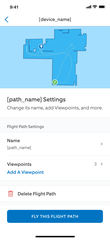
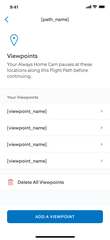
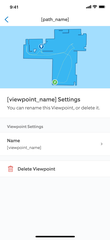
Path Creation Path Creation — Viewpoint Creation Disabled 2 Path Creation — Add Viewpoint Controls Viewpoint Creation — Path Created Flight Paths Path Details View Point List View Point Details
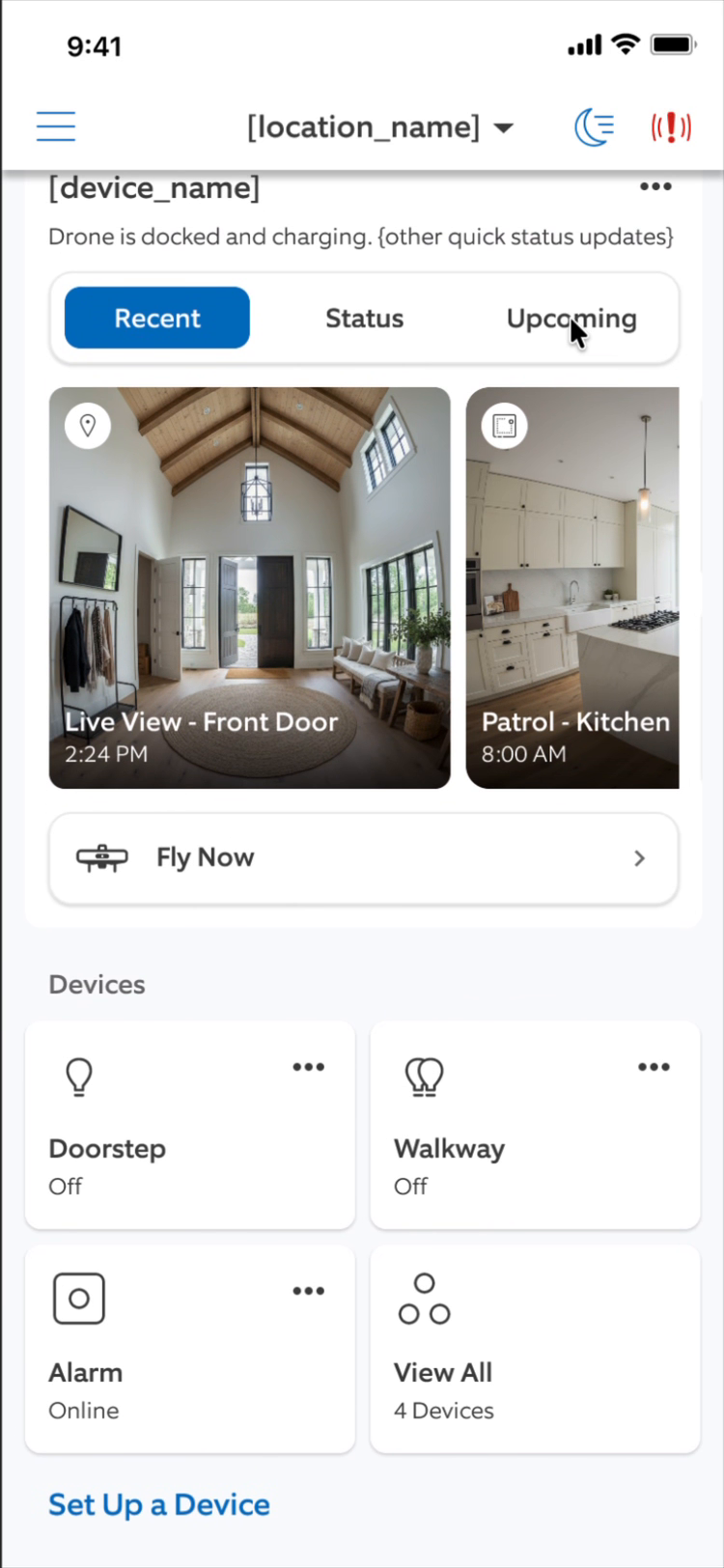
Main Dashboard Concept

"Multi-year programs require patience and future thinking. Designing the current version as a vessel for the next one."

Curriculum Vitae
Michael Renninger
Principal Product Designer

Contact

  • Los Angeles, CA

Expertise

  • Product & UX Design
  • Interaction Prototyping
  • Design Systems
  • Strategic Design Leadership
  • Venture & Emerging Product Design
  • AI-assisted Design Workflows
  • Micro-interaction & Animation Direction
  • Design System Contribution: iconography and components for emerging initiatives
  • Security UX
  • Hardware/Software Integration UX
  • Design Thinking Facilitation
  • Stakeholder & Executive Communication

Tools

  • Figma + FigJam
  • ProtoPie
  • Adobe AIR / AS3
  • Adobe Creative Suite
  • Adobe Animate
  • Xcode (on-device testing)
  • HTML / CSS / JS
  • React
  • Cursor / Kiro
  • Claude / ChatGPT
  • Slack / Jira / Confluence

Education & Training

  • B.A. Psychology
    UCLA
  • Bass Performance
    Musicians Institute
  • Facilitation Training
    DesignThinkers Academy

Languages

  • English: Native
  • Spanish: Proficient
  • Portuguese: Intermediate
  • French: Basic
↓ Download PDF
Experience
Ring (Amazon)
Principal Product Designer
Lead product and UX design for Ring's most complex, emerging, and cross-functional initiatives. Primary focus on new features, technologies, and capabilities requiring broad horizontal insight across Ring's entire product line.
  • Lead designer and architect of the Event Timeline across four generations (2018–2024), culminating in the vertical timeline reimagination
  • Lead designer on Advanced Encryption program from inception through 2026 launch, reducing enrollment from 16 screens to 2
  • Lead designer on Ask Ring AI assistant, inheriting program in December 2025 and driving to June 2026 launch
  • Design lead for Always Home Cam across four hardware generations (v1 through current); UX foundations now underpin the current generation and Ring's broader robotics program
  • Managed a small design team, authored promotion documentation, and successfully advocated for a direct report's advancement to the next level
  • Ongoing mentor to a designer in a separate Amazon organization, coaching them through a successful promotion in 2025
Ring (Amazon)
Sr. Product Designer
Responsible for designing the user interface and experience for Ring Video Doorbells, Security Cameras, and related services. Led product and UX design initiatives and helped guide design thinking across the organization.
  • Initiated and led Event Timeline evolution from discrete motion events to continuous snapshot-based recording
  • Snapshot feature contributed to device reclassification, avoiding ~$40M in export tariff costs (2019–2021)
  • Led venture and emerging design initiatives including 24/7 Recording, Cerulean End-to-End Video Encryption, Mobility, Third-party Camera Integration, and Picture-in-Picture
GoPro
UX Prototyper
Collaborated with usability researchers, UX and UI designers to spearhead and craft high-fidelity, non-linear, interactive prototypes for the Software & Services UX team. Built and maintained a custom prototyping framework for iOS and macOS with built-in testing and monitoring capabilities.
  • Selected to collaborate on ideation of complex new projects, creating high-fidelity prototypes to test viability
  • Developed comprehensive prototyping documentation and validated design thinking through iterative prototype testing
Yuzu™ by Barnes & Noble
Lead UX Prototyper
Oversaw prototyping projects from ideation to pass-off. Produced proofs of concept, interactive prototypes, and internal projects. Mediated between design and engineering teams, enabling challenging design ideas through innovative solutions.
  • Spearheaded first company prototype complete enough for user testing
  • Architected interactive, non-linear models incorporating animations and transitions while supporting usability
  • Developed iOS/macOS framework prototype allowing for multiple branching and cross-pollination
bpg advertising
UX Director, Interactive
Oversaw all UX and IA aspects for client deliverables. Constructed interactive prototypes, wireframes, and flow diagrams. Crafted animations and functional style guides for rich media campaigns.
sensitiveartist
Development Consultant
Full-cycle development for websites and rich media campaigns. Hired and led subcontractors. Grew clientele predominantly through professional referrals, consistently delivering projects on time and within budget.
Ted Perez & Associates
Director, UI Development
Oversaw and managed a team of full-time and freelance developers. Created and maintained a proprietary site development procedure including core functionality code ported from project to project.
Genex
Senior Flash Developer
Contact

Let's build something
worth noticing.

I'm open to staff and principal-level product design roles, particularly those involving complex systems, emerging technology, or long-horizon design challenges.